
Critical Cooling Expansion, Enterprise Data Center
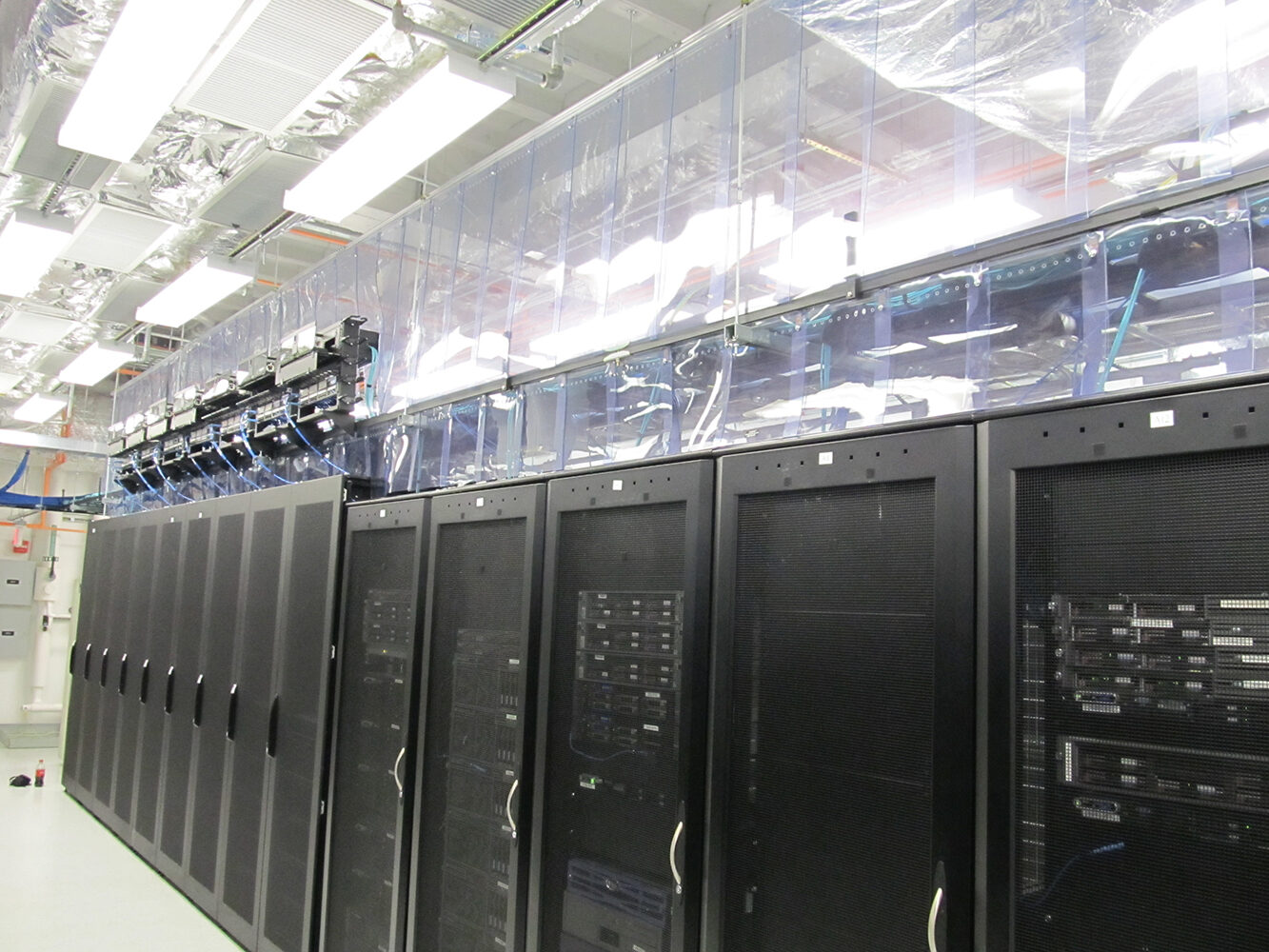
Chilled water CRAH capacity added and containment installed in a live room running hot — no downtime, no loop drain, rack temperatures monitored throughout.
- Downtime
- None
- Loop drains
- Zero
- Rack inlet temps
- Monitored continuously
- Root cause
- Airflow, not capacity
What made it hard
The room was running hot at the top of several racks despite installed tonnage that looked adequate on paper. Load had grown steadily and the operator assumed the answer was more cooling.
Any work had to happen with the room fully live, without draining the shared chilled water loop, and under a change control process requiring an approved method of procedure with rollback steps.
How we executed it
We started with a thermal survey and delta-T mapping rather than a quote for equipment. It showed significant bypass and recirculation: unsealed cable cutouts, missing blanking panels, perforated tile placement working against the layout, and two units fighting each other on humidity control.
Airflow remediation and hot-aisle containment came first and recovered a meaningful share of the apparent deficit. We then added CRAH capacity for genuine load growth, using hot-tapped and valved tie-ins so the loop stayed wet and every existing unit kept running.
Each step ran to an approved MOP with defined abort criteria, with rack inlet temperatures monitored live by our foreman and the operator's staff together.
What the owner got
Hot spots were eliminated and rack inlet temperatures came into specification with less added capacity than originally budgeted, because the airflow problems were fixed first.
The room stayed online for the entire project and the operator now has isolation that allows any single unit to be serviced without affecting the loop.


Bring us the hard one
Occupied buildings, no shutdown window, a survey finding with a deadline, a plant nobody wants to touch. That is the work we are built for.