
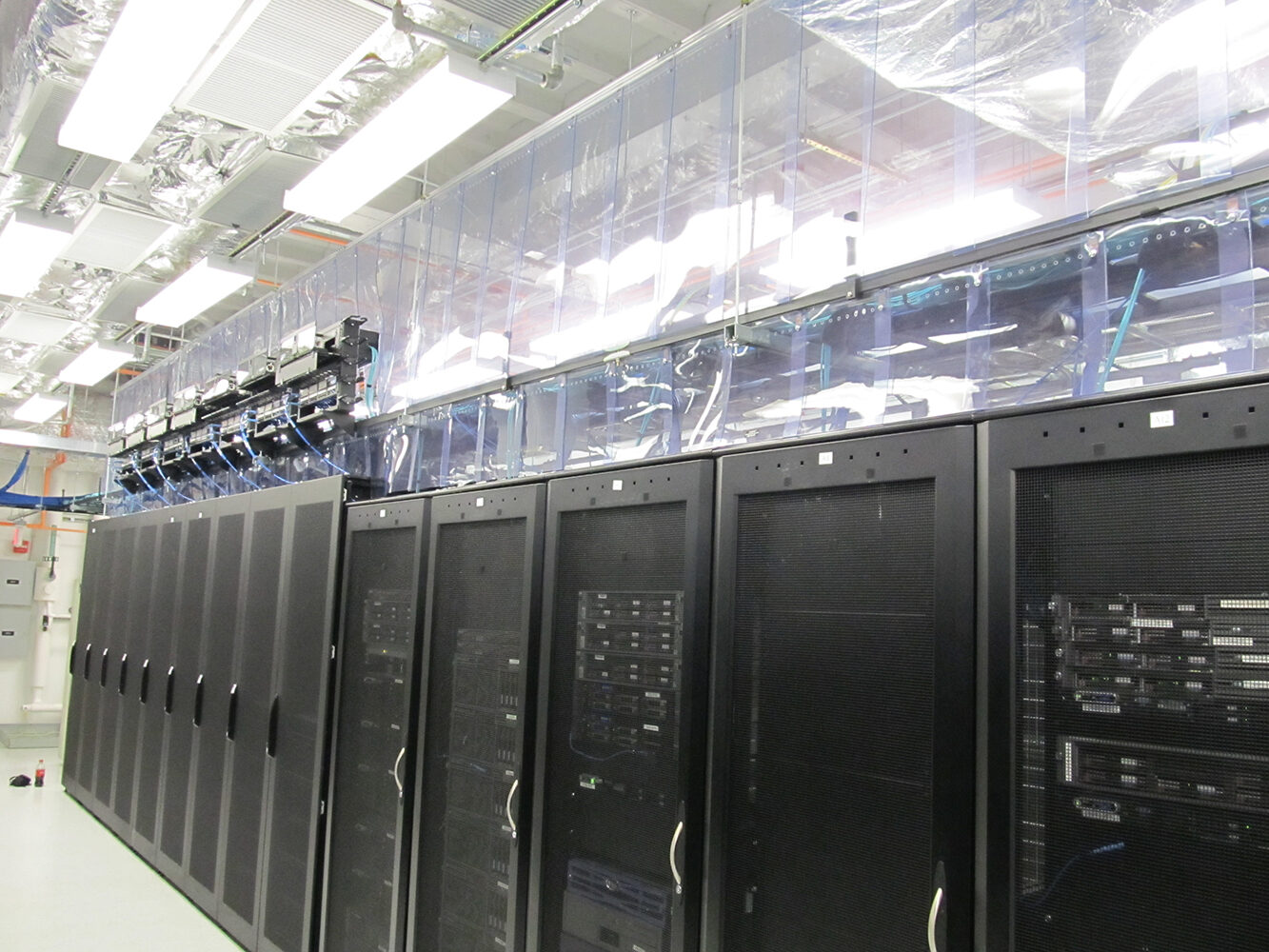
Data Center & Critical Cooling Systems
CRAC/CRAH and chilled water cooling for live IT rooms — redundancy, containment and cutovers planned so the load never sees a gap.
A data center or critical IT room does not tolerate the improvisation that a normal building does. Cooling is a continuous-duty utility: lose it and you have minutes, not hours. That constraint changes every decision — how the plant is configured, how valves and isolation are arranged, how a unit gets replaced, and how maintenance happens without ever taking the room below its N requirement.
CMI supports enterprise data centers, hospital and campus IT rooms, telecom spaces, and the server rooms inside life-science and government facilities. We replace and add CRAC and CRAH units, build and modify chilled water plants with redundant pumping and isolation, install in-row and rear-door cooling, add humidification and dehumidification control, implement hot- and cold-aisle containment, and clean up the airflow problems — bypass, recirculation, missing blanking panels, starved racks — that make a room run hot even though it has plenty of nominal tonnage.
Most of our critical-cooling work is retrofit work in rooms that are already full. We plan it with temporary cooling, rack-level temperature monitoring during the work, valved isolation so no shared loop is drained, and step-by-step method-of-procedure documents reviewed with your IT and facilities teams before a single tool comes on site. If a MOP does not have a rollback step, it is not finished.
Scope & capabilities
- CRAC/CRAH replacement, addition and relocation in live IT rooms
- In-row, rear-door heat exchanger and high-density rack cooling
- Hot-aisle/cold-aisle containment, blanking, floor sealing and airflow remediation
- Condenser water, dry cooler, pumped refrigerant and glycol loop systems
- 24/7 emergency response and preventive maintenance for critical cooling assets
- Chilled water plant work with N+1 pumping, redundant risers and valved isolation
- Precision humidity control, dehumidification and reheat
- Thermal surveys, delta-T and return air temperature mapping, capacity assessment
- Method-of-procedure development, temporary cooling and staged cutovers
The technical envelope
- Redundancy
- N, N+1 and concurrently maintainable configurations
- Cooling types
- DX CRAC, chilled water CRAH, in-row, rear-door, pumped refrigerant
- Change control
- Written MOP with rollback, reviewed and approved before mobilization
- Monitoring
- Rack-level temperature and differential monitoring during all work
- Response
- 24/7 emergency dispatch for critical cooling failures
Facility types
Data Center Cooling — straight answers
- Can you replace a CRAC unit without shutting the room down?
- In almost every case, yes. We bring in temporary cooling sized to the room's actual load, isolate the unit being replaced at the valves so the loop stays wet and other units keep running, monitor rack inlet temperatures continuously, and work to a MOP with defined abort criteria. The room stays online; the individual unit is the only thing out of service.
- Our room has enough tonnage but still runs hot. What's going on?
- Usually airflow, not capacity. Bypass air returning to the units without passing a rack, recirculation over the top of racks, missing blanking panels, unsealed cable cutouts, wrong perforated tile placement, or units fighting each other on humidity. A thermal survey and delta-T mapping typically finds it, and the fix is often far cheaper than adding cooling.
- Do you offer maintenance agreements for critical cooling?
- Yes, and we recommend them here more strongly than anywhere else. Critical cooling maintenance is scheduled around your change windows, includes filter and belt service, coil cleaning, refrigerant and superheat checks, humidifier service, condensate and pump verification, and an annual capacity check against the room's current load — which almost always grew since the last one.
Get a number you can budget against
We walk the plant before we price it. You get equipment condition, options, phasing and a schedule — not a guess with a contingency wrapped around it.