
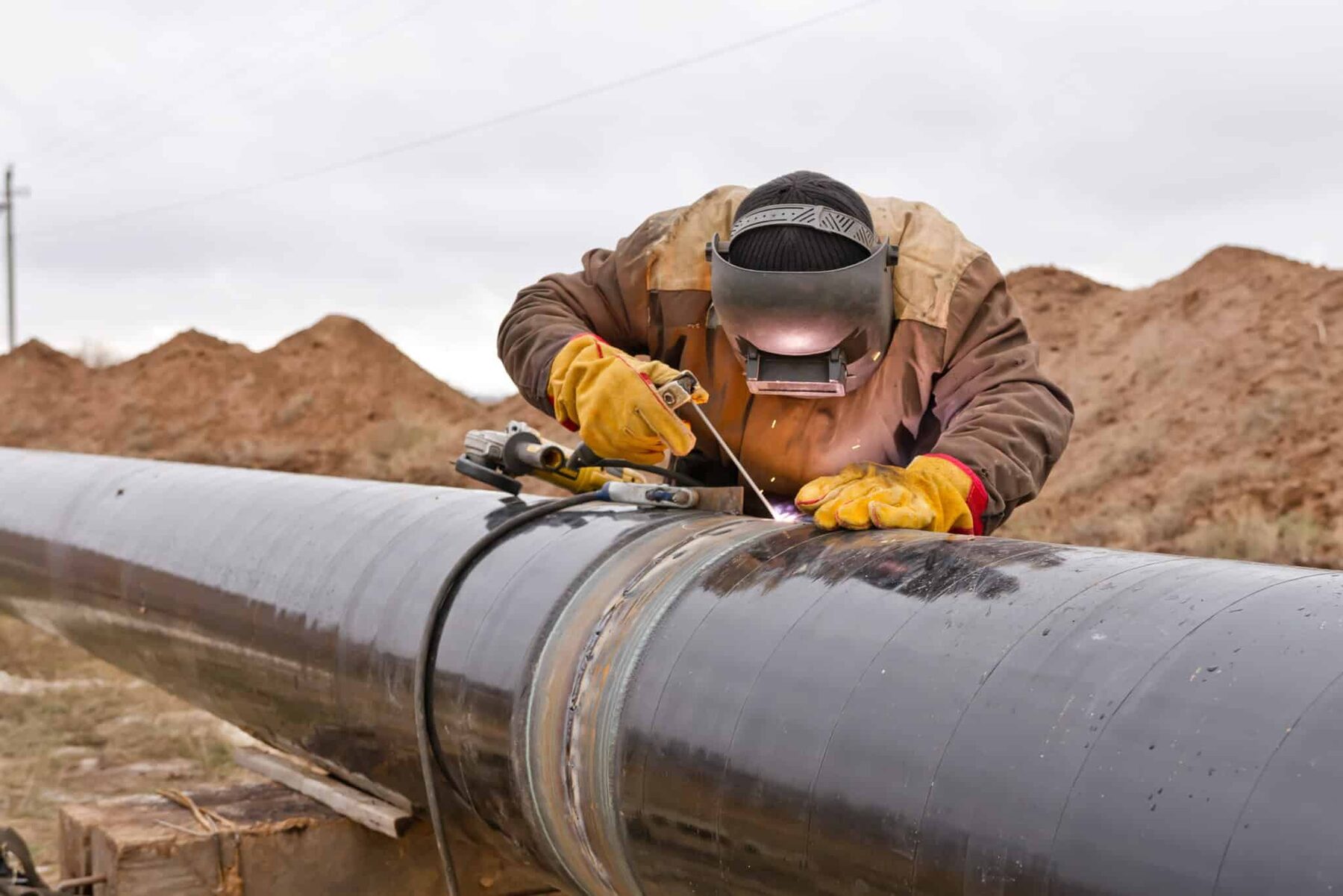
Steam & Condensate Piping Installation
New and replacement steam mains, returns and PRV stations — welded, expansion-compensated and properly supported.
Steam piping punishes shortcuts. Get expansion, pitch, drip legs, anchors or condensate handling wrong and you get water hammer, blown gaskets, cracked fittings and eventually an injury. Our pipefitters build steam systems the way steam requires: correct pitch and drainage, drip legs at every low point and riser, expansion loops or joints with real anchors and guides, and supports sized for hot and cold positions.
We install and replace steam distribution mains, high- and low-pressure branches, PRV stations with proper separation and safety relief, condensate returns, pumped and vacuum return systems, converters and heat exchanger piping, and the insulation and jacketing that goes with it. Welding is performed to qualified ASME Section IX procedures with documented welder qualifications.
Fabrication happens in our shop wherever possible — spools, headers and PRV assemblies built and tested off site, then rigged and tied in during your outage window. That keeps hot work and field time in an occupied hospital or plant to a minimum and makes the cutover predictable.
Scope & capabilities
- Welded carbon steel steam distribution mains and branches
- PRV station fabrication with separators, strainers and safety relief
- Steam-to-water converter and heat exchanger piping packages
- Insulation, jacketing and code-compliant labeling
- ASME Section IX qualified weld procedures and welder documentation
- Expansion loops, expansion joints, anchors, guides and slide supports
- Gravity, pumped and vacuum condensate return systems
- Shop fabrication of spools and headers with hydro/pneumatic testing
- Hot work permitting, fire watch and occupied-facility procedures
The technical envelope
- Pipe sizes
- 1/2" – 24" carbon steel, stainless where required
- Joining methods
- SMAW/GTAW welded, flanged, grooved where appropriate
- Testing
- Hydrostatic and pneumatic testing with documented results
- Fabrication
- In-house shop spooling, staged for outage windows
- Compliance
- ASME B31.1 / B31.9, ASME IX welder qualification
Facility types
Steam & Condensate Piping — straight answers
- Why does our steam system hammer?
- Nearly always condensate that cannot drain — a failed trap, a sagging main, a missing drip leg, an undersized return, or a valve being opened too fast on a cold main. We locate the cause rather than adding another trap and hoping.
- Can you weld in an occupied hospital?
- Yes, under hot work permits with fire watch, welding blankets, area protection and ILSM measures coordinated with your safety officer. Where welding is not acceptable in a space, we shift the joint into the shop or use approved mechanical joining.
- Do you provide welder certifications and test documentation?
- Standard with every project: qualified weld procedures, welder qualification records, weld maps where specified, and hydrostatic or pneumatic test reports in the closeout package.
Get a number you can budget against
We walk the plant before we price it. You get equipment condition, options, phasing and a schedule — not a guess with a contingency wrapped around it.