
Preventive Maintenance Agreements for Commercial Mechanical Systems
Written, asset-based PM programs for chillers, boilers, towers, AHUs and controls — with real task lists and real reporting.
Most maintenance agreements are a filter change and an invoice. Ours start with an asset inventory: every chiller, boiler, tower, pump, air handler, RTU, exhaust fan and controls panel, with nameplate data, location, age, condition and criticality. You cannot maintain what nobody has written down, and you cannot plan capital without it either.
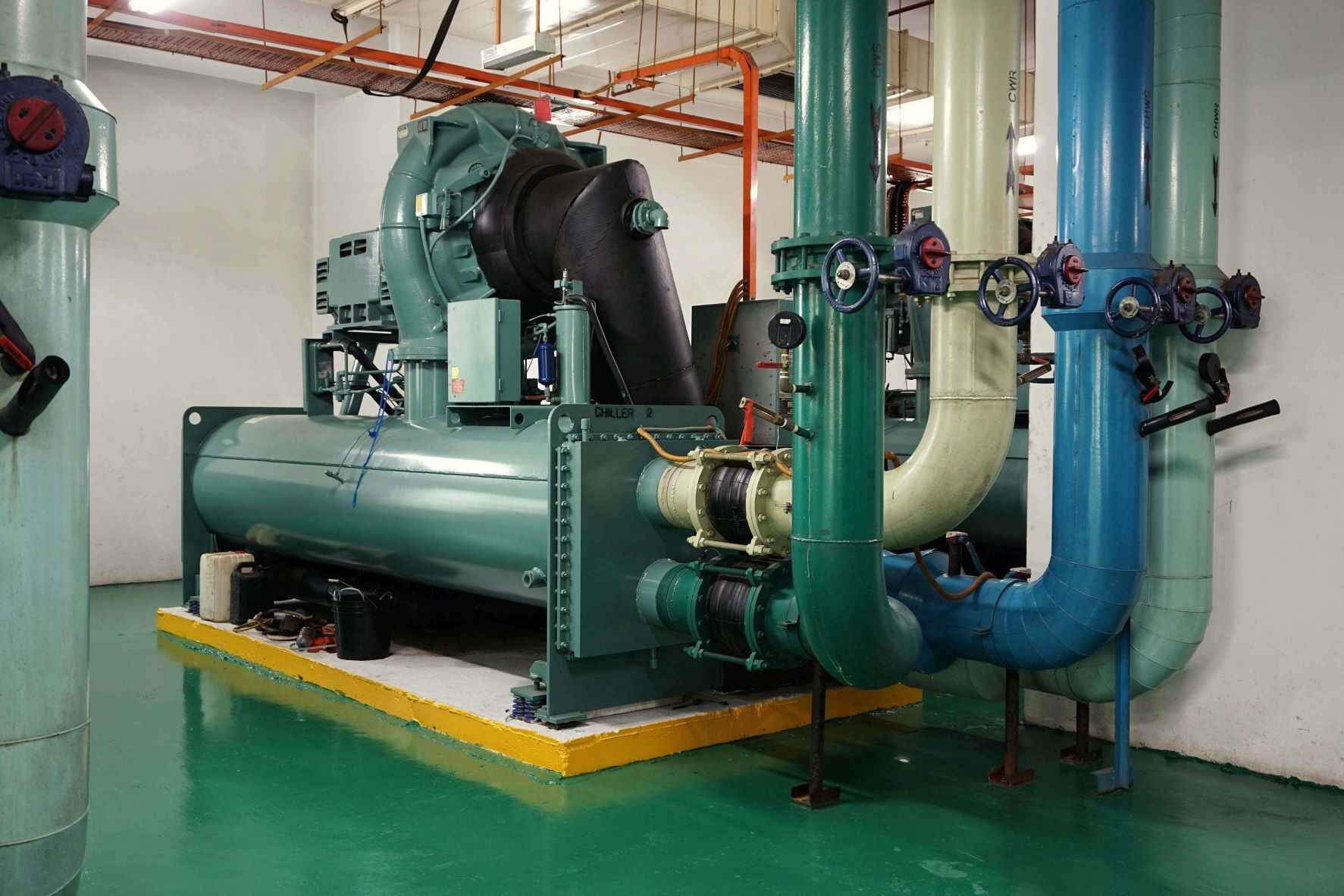
From that inventory we build a task-level program — what gets done, at what interval, by whom, with what tolerance. Quarterly and annual chiller service with oil and refrigerant analysis, boiler and burner service with combustion analysis, tower cleaning and water treatment coordination, coil cleaning, belt and bearing service, filter programs sized to your actual loading, valve and damper exercise, control loop verification and sensor calibration. Every visit produces a report with readings, not a checkmark.
The point of a program is fewer emergencies and better decisions. After a year of trended readings we can tell you which chiller is approaching a tube-bundle decision, which AHU is losing coil capacity, which boiler is burning inefficiently and where your next five years of capital should go. Agreement customers also get priority emergency dispatch and pre-approved labor rates, which matters at 2 a.m. more than it does at contract signing.
Scope & capabilities
- Asset inventory with nameplate data, age, condition and criticality ranking
- Chiller service: oil and refrigerant analysis, eddy current coordination, log trending
- Cooling tower cleaning, mechanical service and water treatment coordination
- Controls maintenance: sensor calibration, loop verification, alarm review, trend audits
- Annual condition report with deficiency list, budget pricing and capital plan
- Written task lists and intervals per asset class — no generic scope language
- Boiler and burner service with combustion analysis and safety device testing
- AHU, RTU and fan service: coils, belts, bearings, dampers, actuators, filters
- Filter programs, refrigerant tracking and regulatory record keeping
- Priority emergency dispatch and pre-agreed labor rates for agreement customers
The technical envelope
- Agreement types
- Inspection, full-coverage PM, and PM plus repair labor
- Visit frequency
- Monthly, quarterly, semiannual and annual by asset class
- Reporting
- Per-visit readings, deficiency log, annual condition and capital report
- Response
- Priority dispatch, 24/7, with pre-approved rates
- Term
- Annual and multi-year, with defined escalation and scope schedules
Facility types
Preventive Maintenance — straight answers
- What is actually in your PM scope? Most proposals are vague on purpose.
- Ours is an appendix, not a paragraph. Each asset class gets a task list with intervals and acceptance criteria, and each visit report shows readings against those criteria. If a task is not on the list, we did not promise it — and if it is, you can verify it was done.
- Can you take over equipment another contractor has been maintaining?
- Yes. We start with a baseline survey so both of us know the condition we inherited, and we document deferred maintenance separately from ongoing PM. That protects you from paying for someone else's neglect as if it were routine service.
- Does a maintenance agreement include repairs?
- Depends on the structure you choose. Inspection agreements cover scheduled tasks and quote repairs separately. Full-coverage agreements roll defined repair labor — and in some cases parts — into the fee. For critical facilities we usually recommend at minimum covering repair labor, because that is where emergency costs escalate fastest.
Get a number you can budget against
We walk the plant before we price it. You get equipment condition, options, phasing and a schedule — not a guess with a contingency wrapped around it.